Do you remember AltaVista? Lycos? Ask Jeeves? No? That's exactly the point. Search engines come and go. Only Google seems immortal. For over 20 years, a single company has dominated how we search the internet. This has advantages – Google is incredibly good. But it also has disadvantages that we need to talk about.
As of 2025, Google controls around 89–90% of the global search market. On desktop, this figure is around 79%, and on mobile, it is as high as 95%. This sounds like a monopoly – because it is.
But here's the good news: for the first time in a decade, Google's market share is measurably declining. AI search engines, independent alternatives and a growing unease with Big Tech are changing the landscape faster than ever before.
The current situation: There are more than 20 serious search engines – and some of them are actually better than Google for certain applications. This article shows you all the relevant options, when you should use which ones, and which ones you can safely ignore. No marketing jargon, no scaremongering, just the latest figures.
The market in 2025: Who's playing – and who's really paying?
Before we dive into the alternatives, a quick reality check. The following figures are taken from StatCounter, SimilarWeb and official company data (as of autumn 2025).
Spoiler: Most alternatives have less than 1% market share – but that says nothing about their quality.
Google: ~89 % worldwide, processes approximately 8.5 billion search queries per day. On desktop 79 %, on mobile 95 %. Market share falls below 90 % for the first time since 2015.
Bing: ~4 % worldwide, but 12 % on desktop – thanks to Windows integration. In the US, it's even 7.5 %. Growing steadily through Copilot integration.
Yandex: ~2.5 % worldwide, but 76 % in Russia. The undisputed number one there, with its own index.
Baidu: Less than 1% globally, but 68% in China on mobile. Indispensable for the Chinese market.
Yahoo: ~1.2 % – still active, but utilises Bing results. Still relevant in Japan with 8.9 %.
Ecosia: ~1.2 % worldwide – ranked 6th among the most frequently used search engines. Berlin-based company with over 230 million trees planted.
DuckDuckGo: ~0.6-0.9 % worldwide, but 2 % in the USA. Processes approximately 100 million search queries daily.
And now for the big news: The most exciting developments are happening outside of this list. AI search engines such as Perplexity already process 780 million queries per month. Brave Search handles 1.6 billion queries per month with its own index. And ChatGPT Search has over a billion web searches per week. These are no longer marginal phenomena.
Privacy-focused search engines
DuckDuckGo: The Privacy Champion
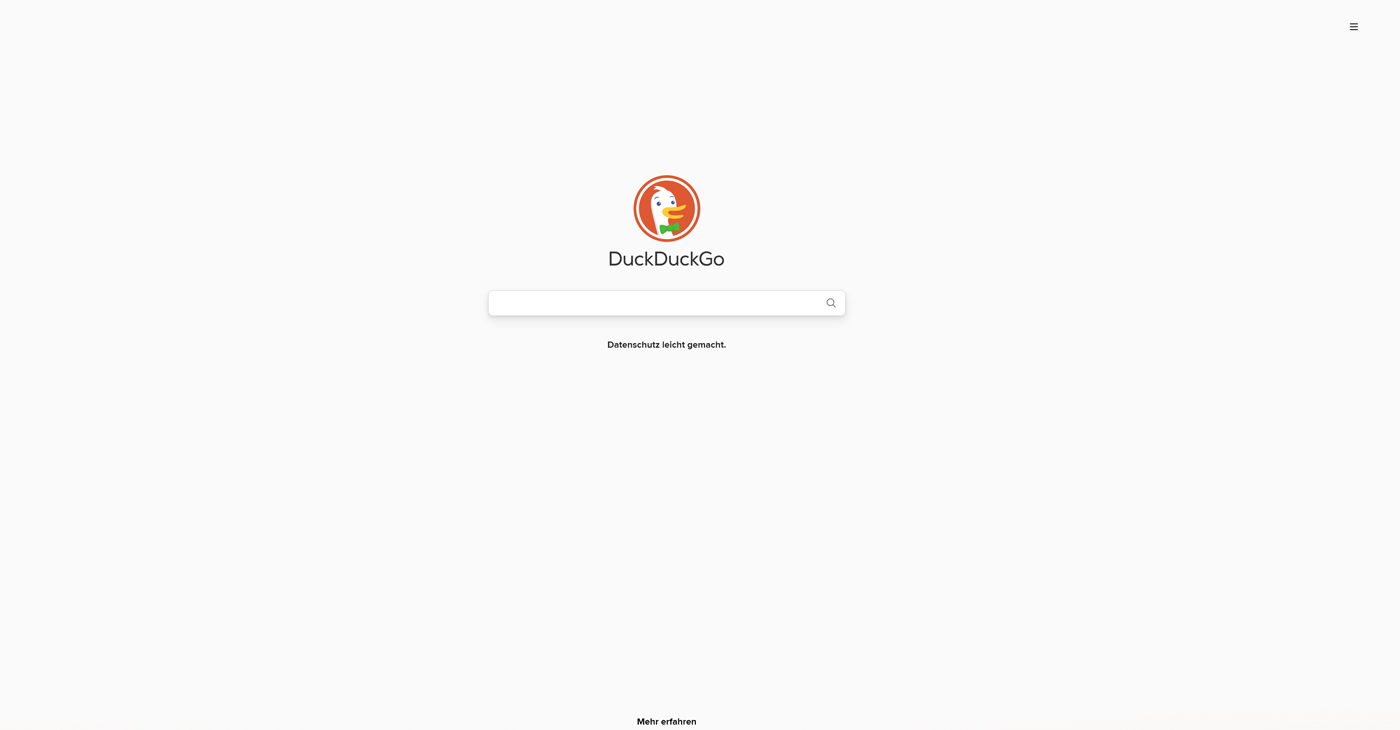
DuckDuckGo is the rock star among privacy search engines. Founded in 2008 by Gabriel Weinberg, the duck (yes, the mascot is a duck) has become the best-known alternative to Google. Its promise: no tracking, no storage of personal data, no personalised ads.
Exciting information: DuckDuckGo primarily uses Bing as its source for results, supplemented by over 400 other sources and its own crawler (DuckDuckBot). So you get Google-like results – just without the stalking.
| Pro | Contra |
|---|---|
| Consistent data protection without tracking | Search results sometimes less comprehensive than Google |
| Bangs (!g, !w, !yt) for direct searches on other sites | Local search not as accurate |
| Clean, ad-free interface | No personalisation = sometimes irrelevant results |
| Own browser with tracking protection |
Startpage – Google results without Google tracking
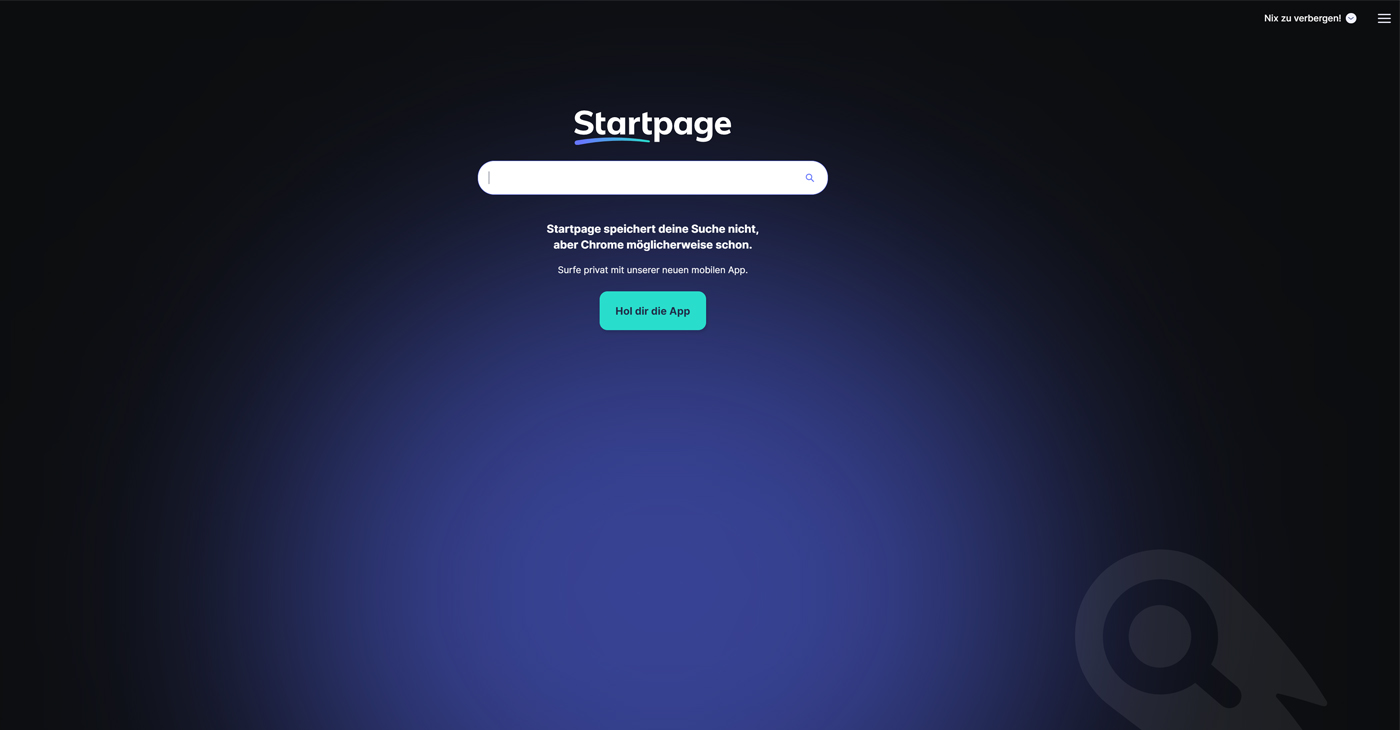
Startpage is the smart middleman between you and Google. The Dutch search engine retrieves Google results without Google knowing who made the request. So you get the full Google quality – but anonymously.
And now for the big news: Startpage offers „Anonymous View“, which allows you to visit websites via a proxy. Only Startpage sees the target page, not you. This is useful for research where you don't want to leave any traces.
| Pro | Contra |
|---|---|
| Google quality without Google tracking | Sometimes slightly slower due to proxy redirection |
| Anonymous View for anonymous browsing | Dependent on Google (if Google changes, Startpage changes) |
| Dutch company (EU data protection) | Anonymous View may restrict website functions |
Qwant – Europe's hope
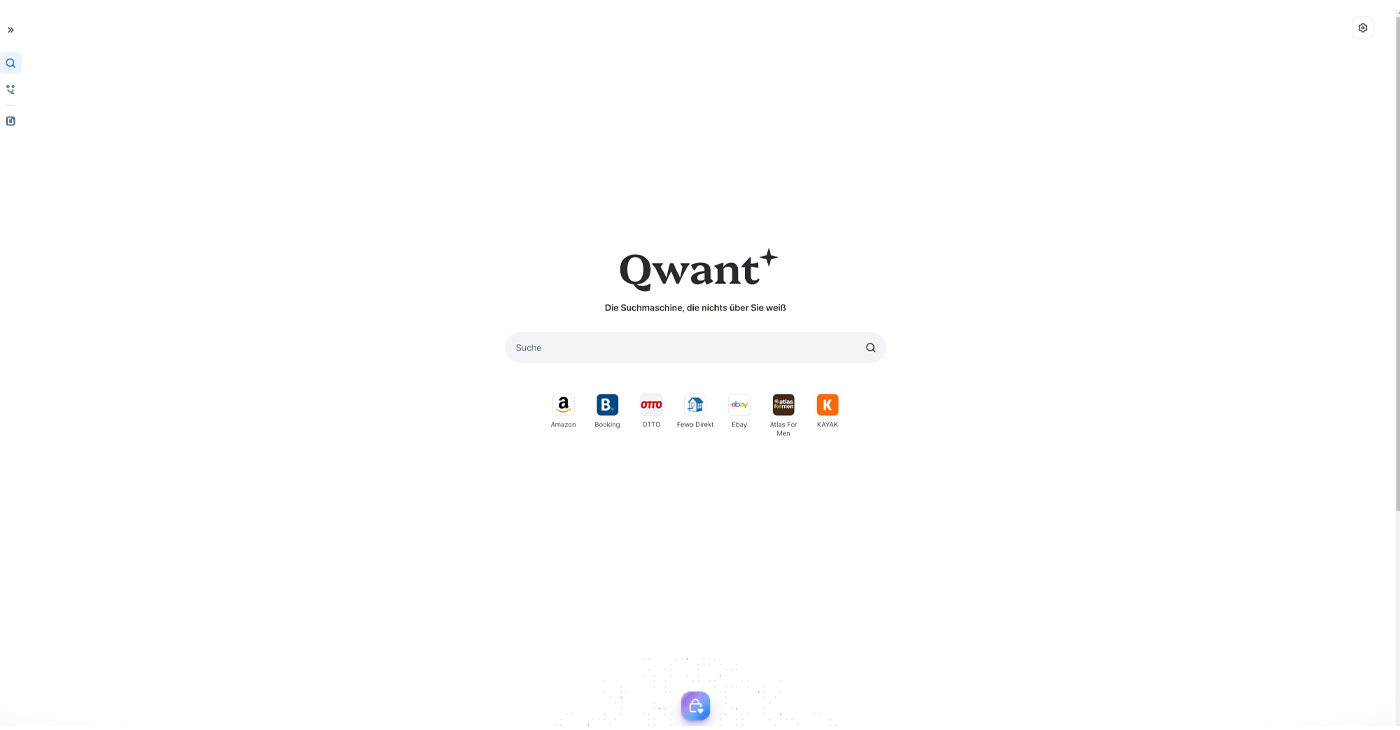
Qwant is France's answer to American tech dominance. Founded in 2013, the search engine advertises strict GDPR compliance and its own index for European content. Qwant is particularly popular in France – the French government even uses Qwant as its default search engine.
Reality: Qwant combines its own crawling results with Bing data. The user interface is clear and sorts results by web, news and social media. A solid choice for European users who value data sovereignty.
| Pro | Contra |
|---|---|
| 100% GDPR compliant | Search results often less comprehensive than Google |
| European provider with servers in the EU | Weaker for English search queries |
| Qwant Junior especially for children | Partially dependent on Bing index |
| Clear categorisation of results |
Specialised search engines
Ecosia – Searching for the rainforest
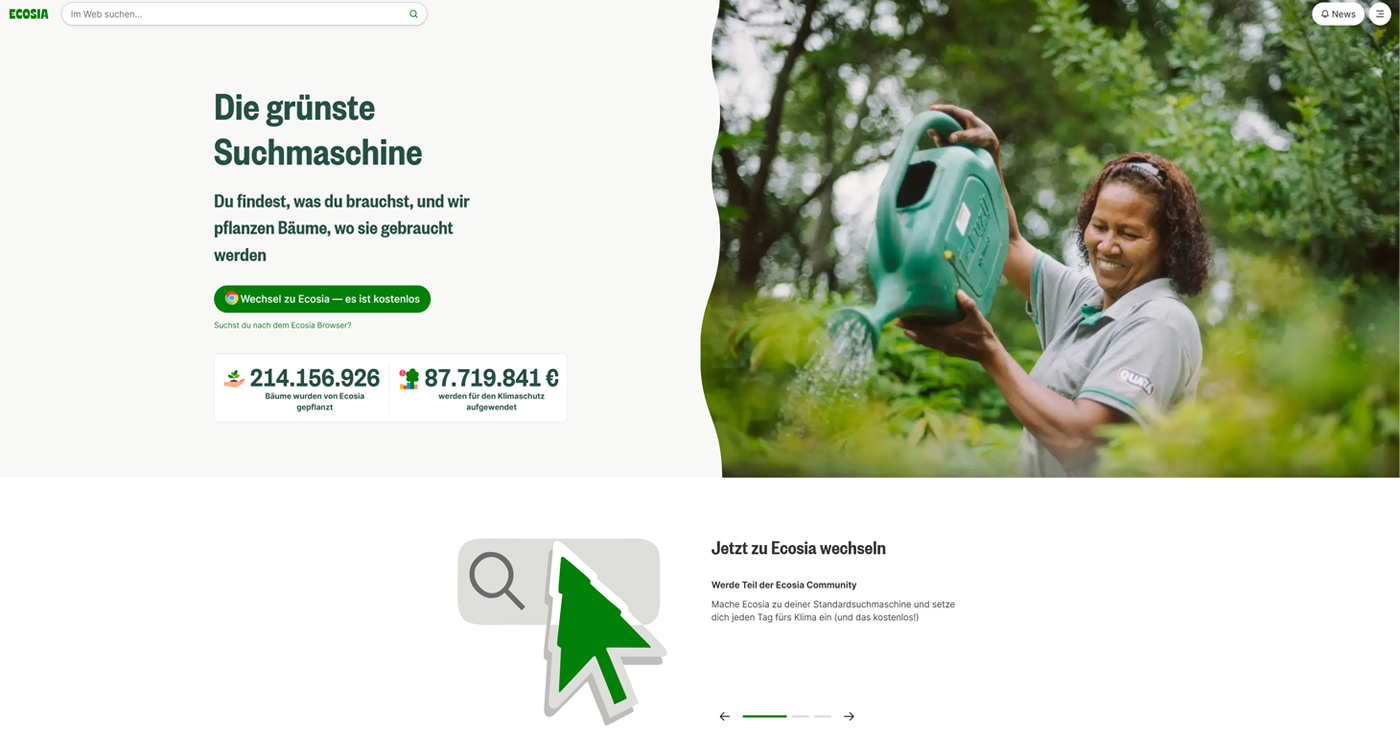
Ecosia is the search engine for anyone who wants to compensate for their guilty conscience about their latest Amazon order. The Berlin-based company uses its advertising revenue to plant trees worldwide. As of 2025, over 200 million trees have been planted.
What really matters: Ecosia publishes monthly financial reports and transparently shows where the money goes. The search results are based on Bing, supplemented by its own algorithms. On average, it takes about 45 searches to finance one tree.
| Pro | Contra |
|---|---|
| Genuine reforestation projects with proof | Search results are based on Bing (not always optimal) |
| CO2-neutral servers | Less focused on data protection than DuckDuckGo |
| Full transparency regarding finances | Advertisements are displayed (necessary for tree planting) |
| German company |
Brave Search: Independent and ad-free
Brave Search comes from the creators of the Brave browser and is one of the few search engines with its own index. No Bing data, no Google results – everything is homemade. Launched in 2021, Brave Search activated its own index as the default source in 2023.
Exciting information: Brave Search offers a „Goggles“ feature that allows you to influence the ranking algorithms yourself. Do you only want to see tech blogs? Or would you rather not see Pinterest results? No problem with Goggles.
| Pro | Contra |
|---|---|
| Own index – no dependence on Google/Bing | Index even smaller than Google's |
| Ad-free (optional premium) | Sometimes less up-to-date results |
| Goggles for personalised rankings | Full power only in the Brave browser |
| Seamless integration with Brave Browser |
Swisscows: Family-friendly from Switzerland
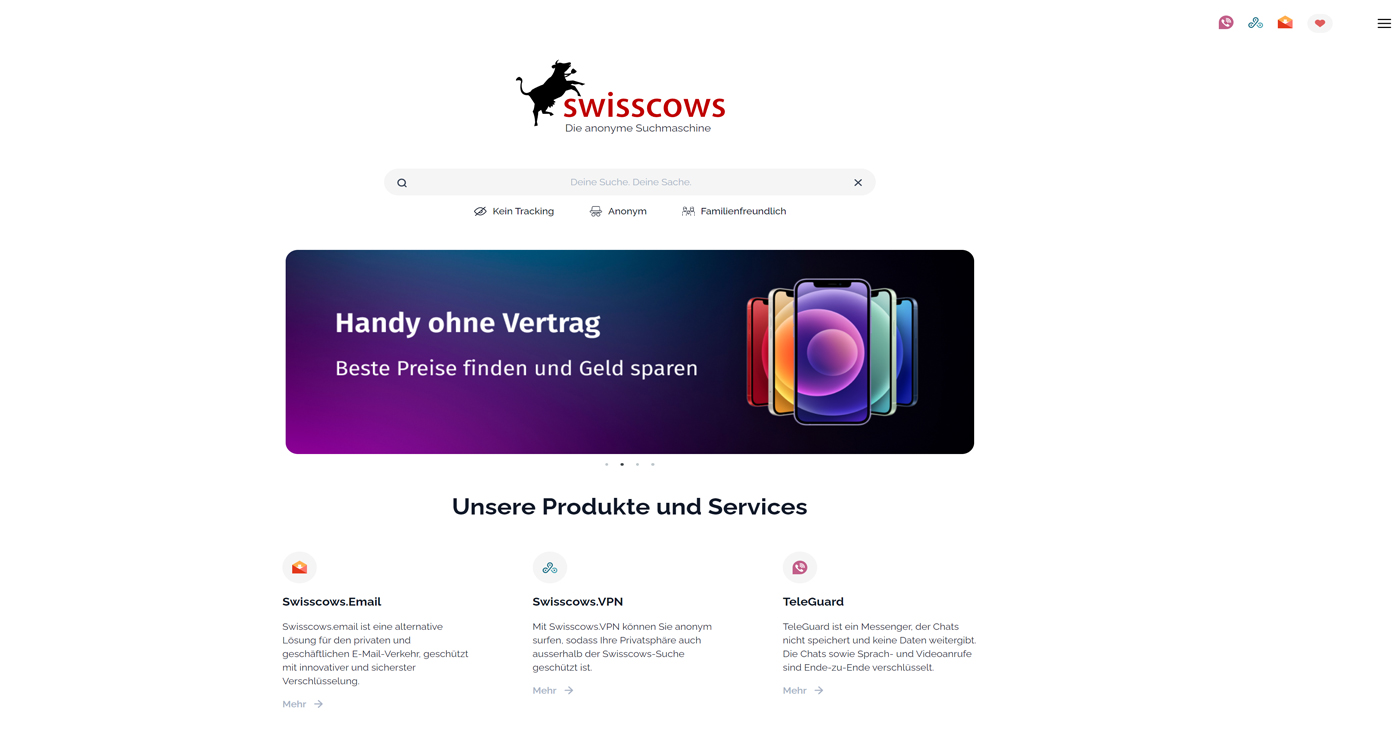
Swisscows is the search engine for parents who don't want their children to encounter questionable content during a harmless search. The Swiss search engine automatically filters out content that is harmful to minors – without having to activate it first.
Additional information: Swisscows uses semantic analysis to understand the context of search queries. The servers are located in Switzerland (strict data protection laws), and no IP addresses or personal data are stored.
| Pro | Contra |
|---|---|
| Automatic youth protection filter | Filters sometimes too strict (also blocks harmless content) |
| Swiss data protection (one of the strictest in the world) | Search results not as comprehensive |
| No storage of IP addresses | Less relevant for adults without children |
| Semantic search technology |
Mojeek: The independent search engine from the UK

Mojeek is the underdog among search engines – and proud of it. Since 2004, the British search engine has been operating its own index with over 8 billion pages. No Bing data, no Google results, no compromises.
Additional information: Mojeek does not collect personal data or create user profiles. Search results are based solely on the relevance of the content – not on what you have searched for previously.
| Pro | Contra |
|---|---|
| 100% proprietary index – genuine independence | Smaller index than Google (8 billion vs. hundreds of billions) |
| No filter bubble due to lack of personalisation | Sometimes less relevant results |
| Strict no-tracking approach | Less well known, smaller community |
SearXNG: The open-source meta search engine

SearXNG (the actively developed successor to Searx) is the Swiss Army knife of search engines. As a meta search engine, it combines results from over 70 sources – Google, Bing, DuckDuckGo, Wikipedia and many more – without the original search engines knowing who is searching.
Information: SearXNG is open source and can be self-hosted. Those who are technically savvy can simply run their own search engine. For everyone else, there are public instances (e.g. searx.be or searx.tiekoetter.com).
| Pro | Contra |
|---|---|
| Combines over 70 search sources | Public authorities vary in quality and reliability |
| Open source and self-hostable | Self-hosting requires technical expertise |
| Fully customisable | Sometimes slower due to aggregation |
| Maximum privacy with self-hosting |
Regional search engine giants
Google is not number one everywhere in the world. In some markets, local players dominate – with all the advantages and disadvantages that this entails.
Yandex – Russia's answer to Google
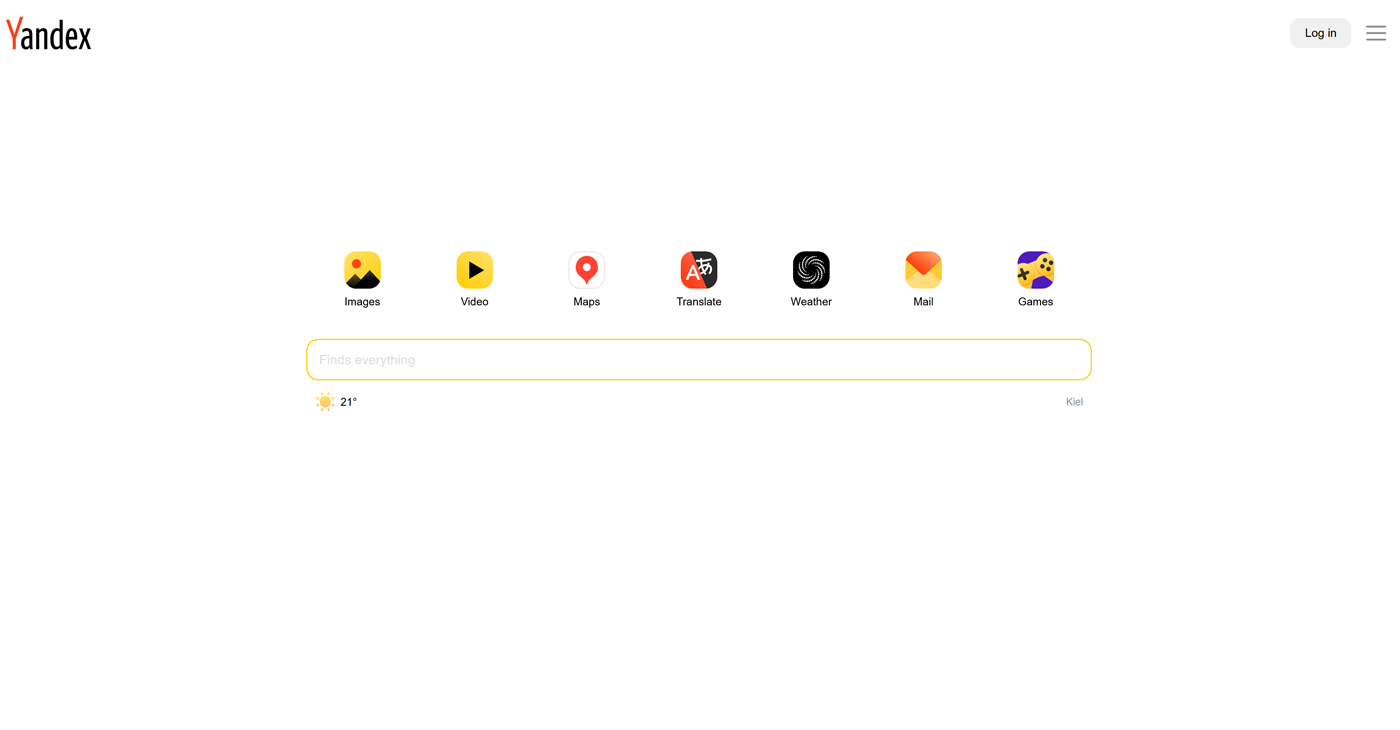
Yandex is to Russia what Google is to the rest of the world – the dominant search engine with a market share of over 60%. The company offers a complete ecosystem: email, maps, cloud storage, taxi service (Yandex.Taxi), even food delivery.
Reality: For Russian-language searches, Yandex often delivers better results than Google. However, its proximity to the Russian government raises significant data protection issues, especially since 2022. For users outside Russia, there are few reasons to use Yandex.
| Pro | Contra |
|---|---|
| Best results for Russian-language content | Significant data protection concerns (proximity to government) |
| Comprehensive ecosystem (mail, maps, cloud) | Not really relevant for Western users |
| Good image search | Under increased observation since 2022 |
Baidu: China's search engine monopolist
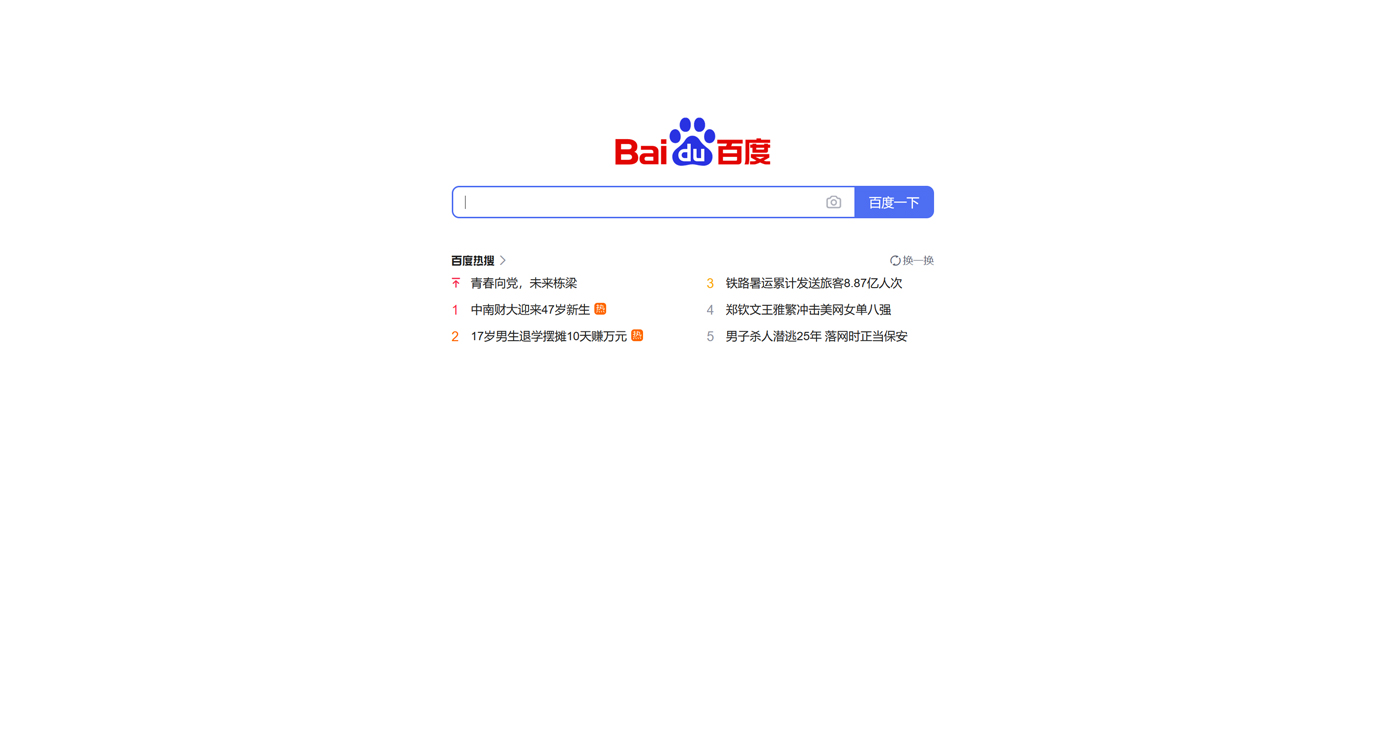
Baidu is by far the largest search engine in China – and for one simple reason: Google has been blocked there since 2010. With a market share of over 70% in China, Baidu is a giant, but one that is heavily controlled by the Chinese government.
The truth: Baidu is subject to Chinese censorship. Politically sensitive topics, international news sites and many Western services are blocked or not displayed. Baidu offers no added value for users outside China.
| Pro | Contra |
|---|---|
| Best results for Chinese-language content | State censorship of search results |
| Extensive ecosystem (Baidu Maps, Baidu Cloud) | Massive data protection issues |
| The only realistic option in China | Irrelevant for users outside China |
Bing: Microsoft's underrated alternative

Bing is often ridiculed – unjustifiably so. Over the years, Microsoft's search engine has developed into a solid alternative and holds a global market share of around 3-4 per cent. That may not sound like much, but it represents hundreds of millions of users.
What really matters: Bing is deeply integrated into the Microsoft ecosystem (Windows, Edge, Office). Its image search is often better than Google's, and its rewards programme rewards users with points that can be exchanged for vouchers. What's more, Bing provides the index for many other search engines (DuckDuckGo, Ecosia, Qwant).
| Pro | Contra |
|---|---|
| Very good image search and video search | Data collection similar to Google |
| Bing Rewards (points for search queries) | Less comprehensive than Google for niche topics |
| Seamless Windows and Edge integration | Bing advertising sometimes intrusive |
| Solid search results |
AI search engines: The new generation
Forgotten how search used to work? Welcome to 2025. AI search engines no longer provide a list of links, but direct answers – summarised, contextualised and to the point.
Microsoft Copilot: The AI assistant with search function
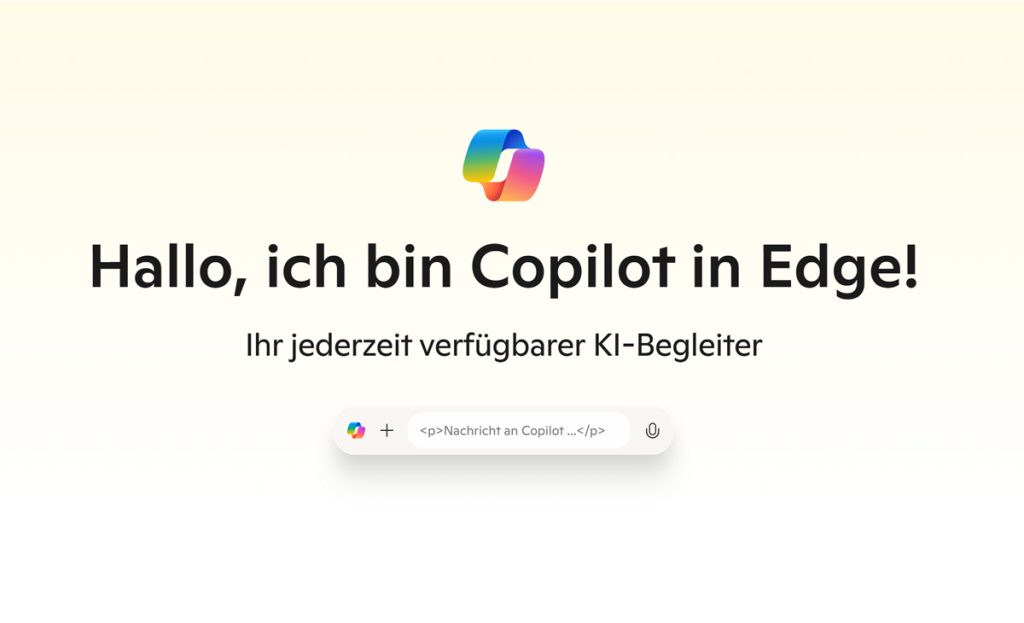
Microsoft Copilot (formerly Bing Chat) is the AI-powered evolution of Bing. Based on GPT-4, Copilot not only delivers search results, but also interactive, context-aware responses. You can ask follow-up questions, generate summaries, or get explanations of complex topics.
Special feature: Copilot is free to use and integrated directly into Windows, Edge, and Microsoft 365. The Pro version offers faster responses and access to the latest GPT versions.
| Pro | Contra |
|---|---|
| GPT-4 available for free use | Tied to the Microsoft ecosystem |
| Interactive conversation with follow-up questions | Data collection by Microsoft |
| Deep Microsoft integration | Sometimes overly cautious responses |
| Can generate images (DALL-E 3) |
Perplexity AI: The Answer Engine
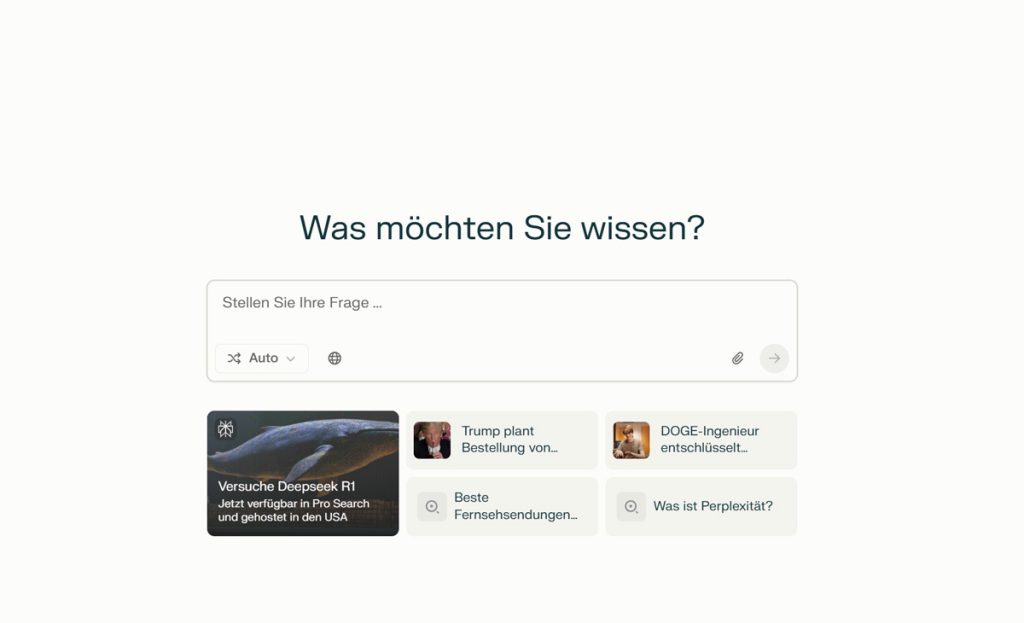
Perplexity AI is what happens when a search engine and an AI chatbot have a baby. Instead of a list of links, you get a fully formulated answer with references. Every statement is linked to a source, so you can check where the information comes from.
Information: Perplexity combines results from the web with its own AI models. The „Pro Search“ mode asks follow-up questions and provides more in-depth answers. For research-intensive tasks, Perplexity is one of the best options as of 2025.
| Pro | Contra |
|---|---|
| Answers with references (verifiable) | Pro features subject to a fee (20$/month) |
| Pro Search for in-depth research | Sometimes hallucinating sources |
| Fast, accurate summaries | Less suitable for simple fact-finding |
| Can also be used free of charge |
You.com & YouChat: Modular AI search
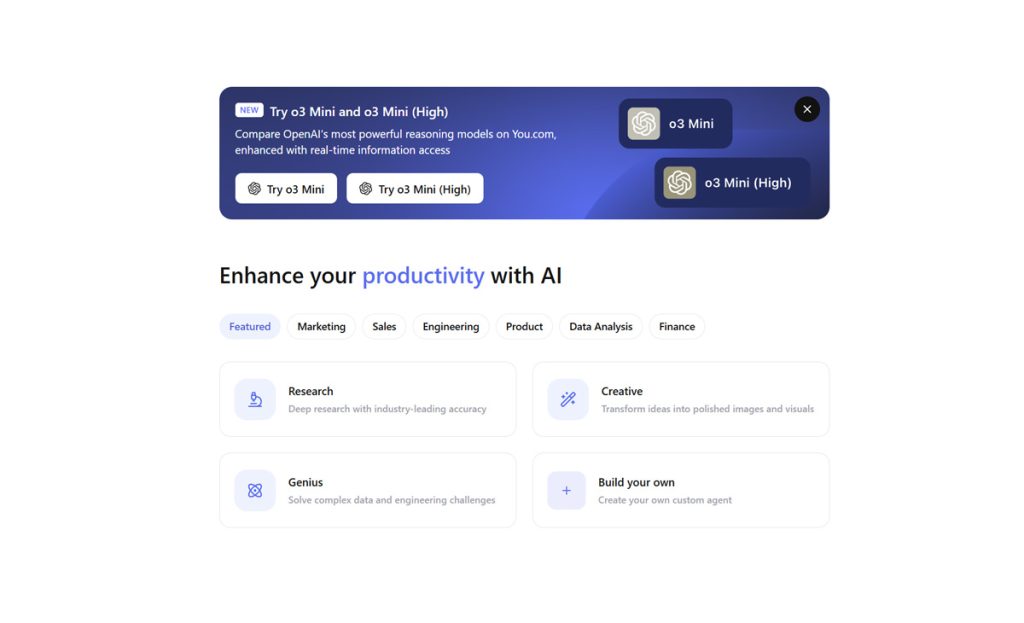
You.com takes an interesting approach: the search engine offers various „apps“ within the search – code, images, videos, news, social media. YouChat is the integrated AI assistant that answers your questions.
What matters: You.com lets you choose between different AI models (GPT-4, Claude, Gemini), offering flexibility that others don't have. The search engine also works without AI as a classic web search.
| Pro | Contra |
|---|---|
| Choice between several AI models | Less well known than competitors |
| Modular design with specialised apps | Interface can appear cluttered |
| Good focus on data protection | Premium features subject to a fee |
| Works even without AI |
Specialized Search Engines for Specific Needs
Sometimes a general-purpose search engine is like a Swiss Army knife for a surgeon – scientific research
Google Scholar – The classic choice for academic papers, dissertations and scientific papers. Free, comprehensive, with citation counter.
PubMed – The reference for medical and biomedical research. Operated by the US National Library of Medicine.
job search
Indeed – The world's largest job search engine aggregates job advertisements from thousands of sources.
LinkedIn – More than just a job search – the complete professional network with recruitment features.
price comparison
Idealo – Germany's largest price comparison platform with price history and retailer ratings.
miser – Particularly strong in technology and electronics, popular in Germany, Austria and Poland.
Which search engine is right for you?
There is no such thing as the „best“ search engine – only the best one for your needs. Here is a quick guide:
- Maximum data protection: DuckDuckGo or Startpage
- Google quality without tracking: Homepage
- European solution: Qwant or Ecosia
- Environmental awareness: Ecosia
- Family-friendly: Swisscows
- Complete independence: Brave Search or Mojeek
- Technology enthusiasts: SearXNG (self-hosted)
- AI-supported research: Perplexity or Microsoft Copilot
5-step plan: How to change your search engine
- Test 2-3 alternatives in parallel – Use it for a week for your typical searches
- Changes the default search engine in the browser – In the settings under „Search“ or „Search engine“
- Install the browser extension – Most alternatives offer add-ons for extra protection
- Use bangs or shortcuts – On DuckDuckGo, for example, use „!g“ for a quick Google search, if necessary.
- Stay flexible – It's okay to use Google for certain searches – no one expects perfection.
Conclusion: Being spoilt for choice is a good thing.
The search engine market in 2025 offers more genuine alternatives than ever before. From privacy-friendly classics such as DuckDuckGo to AI pioneers such as Perplexity and specialists such as Ecosia – there is a suitable solution for every application.
The most important insight: you don't have to choose just one search engine. Most users benefit from using different tools depending on the situation. DuckDuckGo for everyday use, Perplexity for research, Google Scholar for academic work – why not?
The best search engine is the one that meets your needs – not the one that tracks you best.
Further alternatives to explore
During my research, I came across some other interesting search engines that you may want to explore:
- Kagi – Premium search engine without advertising (fee-based, ~10$/month), own index, high quality
- Neeva – Was an ad-free search engine, acquired by Snowflake in 2023 (service discontinued)
- Phind – AI search engine specialising in developer and programming questions
- Andi – AI search assistant with conversational interface
- Wolfram Alpha – Less search engine, more knowledge engine – perfect for calculations and facts
- ChatGPT Search – OpenAI's search integration in ChatGPT (as of 2025 for Plus users)
- Google Gemini – Google's AI assistant with search integration
What search engines are there?
| search engine | Category / Special feature | Advantages | Possible disadvantages |
|---|---|---|---|
| DuckDuckGo | Data protection-oriented | No tracking, anonymous, clear interface | Less comprehensive results |
| Homepage | Google results anonymised | Google quality + data protection | Partially slower due to proxy |
| Qwant | European data protection alternative | GDPR compliant, no tracking | Not as powerful as Google |
| Ecosia | Sustainability (planting trees) | Search queries finance reforestation | Bing-based results sometimes inaccurate |
| Brave Search | Own index, highly privacy-friendly | No tracking, independent search base | Index even smaller than that of large providers |
| Swisscows | Family-friendly and safe | Automatically blocks inappropriate content | Less suitable for complex searches |
| Mojeek | Independent proprietary index | No influence from large corporations | Smaller database |
| Searx | open-source meta search engine | High adaptability, combines many sources | Results partly heterogeneous |
| Yandex | Market leader in Russia | Many additional services | privacy concerns |
| Baidu | Main Chinese search engine | Google-like features | Strict censorship, restricted content |
| Bing | Microsoft alternative | Good image search, Windows integration | Smaller reach than Google |
| AI-based search engines | |||
| Copilot (Bing Chat) | AI assistant-based search | Interactive responses, GPT-4 support | Not always classic search result format |
| Perplexity AI | AI direct responses | Very fast, accurate summaries | Not ideal for traditional results lists |
| YouChat (You.com) | Search + chat interface | Dialogue-based explanations & summaries | Search results depend on the model |
FAQ – Alternative search engines
Why should one use alternative search engines at all?
Alternative search engines offer advantages such as better data economy, less tracking, their own indexes or specialised functions. Many value privacy or regional results, which Google does not provide.
Which search engine is best for data protection?
Search engines such as DuckDuckGo, Startpage and Qwant place a strong emphasis on privacy, do not use personalised profiles and do not track users. The level of protection varies depending on the focus – self-hosting variants such as SearXNG offer maximum control.
Which search engines are suitable for children?
Qwant Junior and other heavily filtered variants such as Swisscows offer safe, youth-friendly results. They automatically block problematic content and are designed for families and schools.
Why do search results differ between providers?
Most alternative search engines use their own indexes or rely on sources such as Bing, Yandex or combined data sets. Therefore, the scope, timeliness and relevance of the results may vary.
Which search engine plants trees and how does it work?
Ecosia is the most well-known search engine that plants trees. It uses 80% or more of its ad revenue to fund reforestation projects worldwide. Every time you perform a search on Ecosia and click on an ad, Ecosia generates income, which is then invested in planting trees. Since its inception, Ecosia has planted over 150 million trees, making it an excellent choice for environmentally conscious users. Additionally, Ecosia publishes monthly financial reports, highlighting the company’s transparency and commitment to sustainability.
Which search engine is the best?
The most used and most effective search engine is Googleas it has the largest market share and delivers the most relevant results. However, for more data protection Alternatives like DuckDuckGo or Startpage popular.
Are there any disadvantages to switching from Google to an alternative?
Yes – depending on the provider, search results may be less comprehensive, specialised functions may be missing, or performance may vary for niche topics. Some services are regionally limited or require technical knowledge (e.g. self-hosting).